- 100% Natural
- Premium Quality
- No Preservatives
- Fresh & Healthy
Soaked almonds vs raw almonds explained: texture, nutrients, digestion myths, safe soaking methods, storage and simple Pakistani breakfast ideas.
soaked almonds vs raw almonds: Soaked almonds vs raw almonds is a common breakfast question in Pakistan, where many families soak badam overnight. Both ways can be enjoyable, but they feel different in the mouth and not every popular health claim about soaking is well supported. Here is a practical comparison focused on taste, preparation, nutrition and food safety.
Almonds absorb some water and become softer. The brown skin may loosen, making the almond easier to peel. The flavor often becomes milder, and the crunch is reduced. People who dislike the firm texture of dry almonds may therefore prefer soaking them. Water exposure is a preparation method, not proof that the nuts have gained extra vitamins or been transformed into a different food.
Unsoaked edible almonds are firmer, more portable and convenient for dry storage. Soaked almonds are softer and moist and therefore should be handled more like a prepared perishable food. Both start with the same almond. Some nutrients can move into soaking water, but the size of any change varies with time and method. It is not accurate to claim that soaking automatically multiplies nutrition or makes almonds universally superior.
You may notice that softer almonds feel easier to chew. That subjective difference does not establish that soaking produces a major digestive advantage for everyone. Studies of soaking and mineral bioavailability in nuts are limited, and sweeping claims about removing all antinutrients are not warranted. If unsoaked almonds agree with you, there is no general need to soak them first. If you have a digestive condition, ask a qualified professional about individual dietary requirements.
Almond skins contain fiber and plant compounds. Peeling soaked badam removes the skin and changes the texture, but it also removes those skin components. Some families prefer peeled almonds for traditional milk drinks or desserts because they blend more smoothly. Whole unpeeled almonds work well as snacks and toppings. Neither approach should be advertised as a universal rule. Choose based on taste, intended recipe and what is comfortable to eat.
Begin with edible almonds purchased from a reliable source. Wash hands and use a clean container and potable water. Cover the nuts and refrigerate while soaking, particularly in Pakistan's warm weather. Drain, rinse and use promptly rather than leaving wet almonds at room temperature overnight. Do not assume soaking destroys microorganisms. Discard nuts that develop an unpleasant smell, sliminess or visible mold. Keep the soaking process simple and hygienic.
Many home recipes use an overnight soak, but longer is not automatically better. Exact softening time varies with almond variety, water temperature and preference. Refrigerated soaking is safer than leaving a bowl in a hot kitchen for extended periods. For a quick recipe, almonds can also be chopped or blended without a lengthy soak, provided your appliance is suitable. If a product's packaging gives special handling instructions, follow those.
Almonds provide unsaturated fats, dietary fiber, vitamin E, protein and minerals. They are energy-dense, so a modest portion is suitable for many people, while individual needs vary. Soaked almonds do not cure disease, guarantee weight loss or improve memory by themselves. For a broader look at common foods and portion sizes, see our dry fruit nutrition and calorie guide. Read labels and consult a professional when you have medically restricted diets or allergies.
Unsoaked badam works as a portable office snack, chopped salad topping or crunchy addition to porridge. Soaked peeled almonds blend smoothly into traditional badam milk, kheer and some sauces. For breakfast, try yogurt with almonds, chopped dates and seasonal fruit. In baking, chopped unsoaked almonds usually give a more distinct crunch, whereas soaked almonds can introduce extra moisture and change the texture. Our Pakistani badam milk recipe offers a familiar use for almonds.
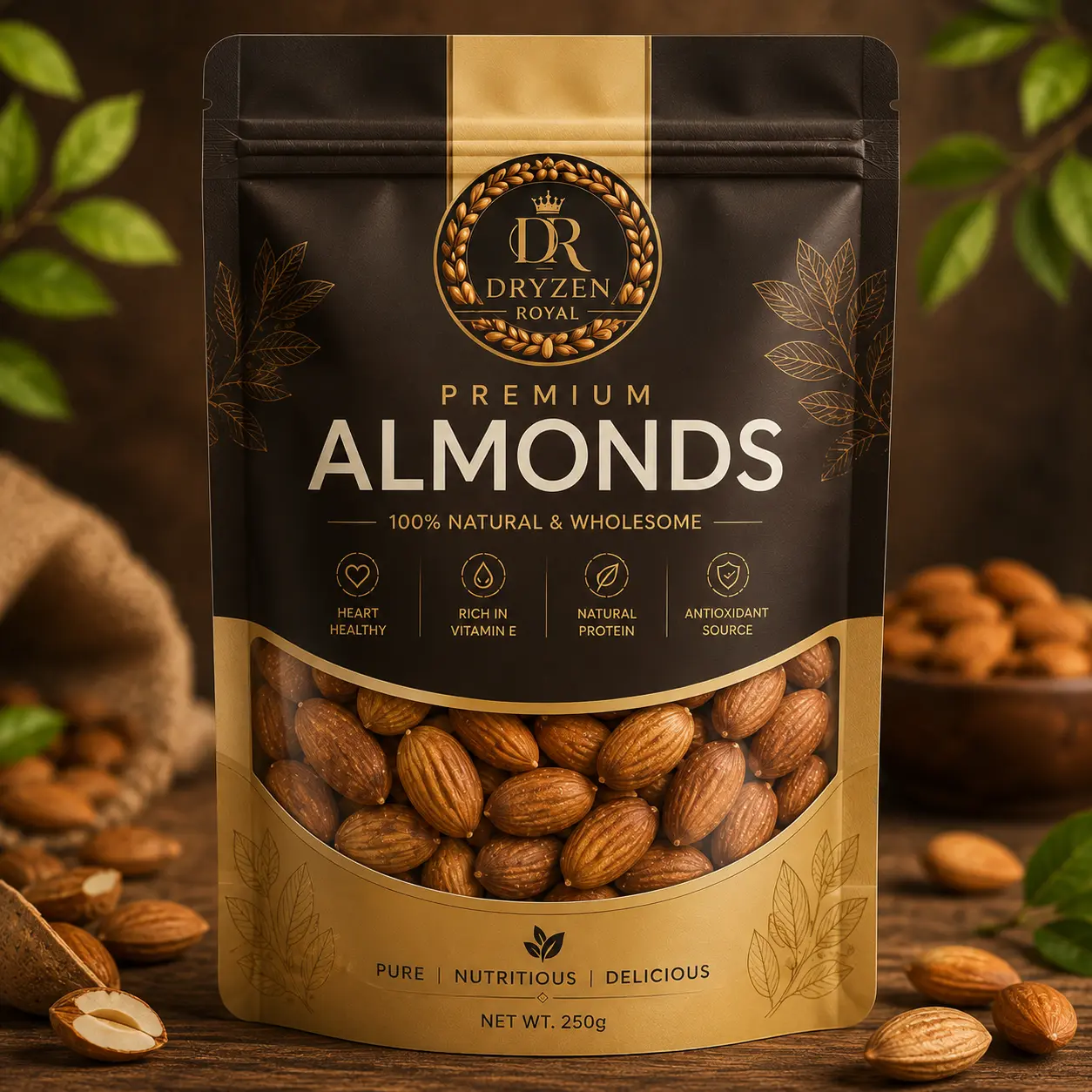
Look for transparent net weight, clear images, packaging details, origin information where available and a seller who answers product questions. Large size alone does not guarantee freshness. Avoid nuts that smell rancid or show moisture damage. The best pack size is one you can store and use properly; a kilogram may suit a busy household but not a person who only eats them occasionally. Check Dryzen Royal Premium Almonds for live pack options.
Unsoaked almonds stay best in a dry, sealed container away from heat and direct light; refrigeration can help in hot climates. Soaked almonds hold moisture, so keep them chilled and use promptly. Do not return wet nuts into the original dry packet. If you prepare soaked almonds in advance, make small batches rather than keeping a large container for days. Read the dry fruit storage guide for additional practical steps.
Not necessarily. Soaking changes texture and can alter some compounds, but evidence does not establish a universal nutritional advantage.
No. Peeling is optional and largely a matter of taste and recipe preference; almond skins also contain fiber.
Refrigeration is the safer choice, especially in warm weather, because soaked nuts hold moisture and can support microbial growth.
Soaked almonds can blend more easily, while chopped or ground unsoaked almonds can also work in a sufficiently powerful blender.
Fasih Frankly
SEO Expert and eCommerce Specialist. Shopify, eBay and online selling.
Questions about this article?
Email us and we will get back to you.
Explore more
