- 100% Natural
- Premium Quality
- No Preservatives
- Fresh & Healthy
The ultimate guide to dry fruits — history, types, 15 health benefits, full nutrition breakdown, storage tips, buyer's guide, and 20 FAQs. Shop premium dry fruits at Dryzen Royal.
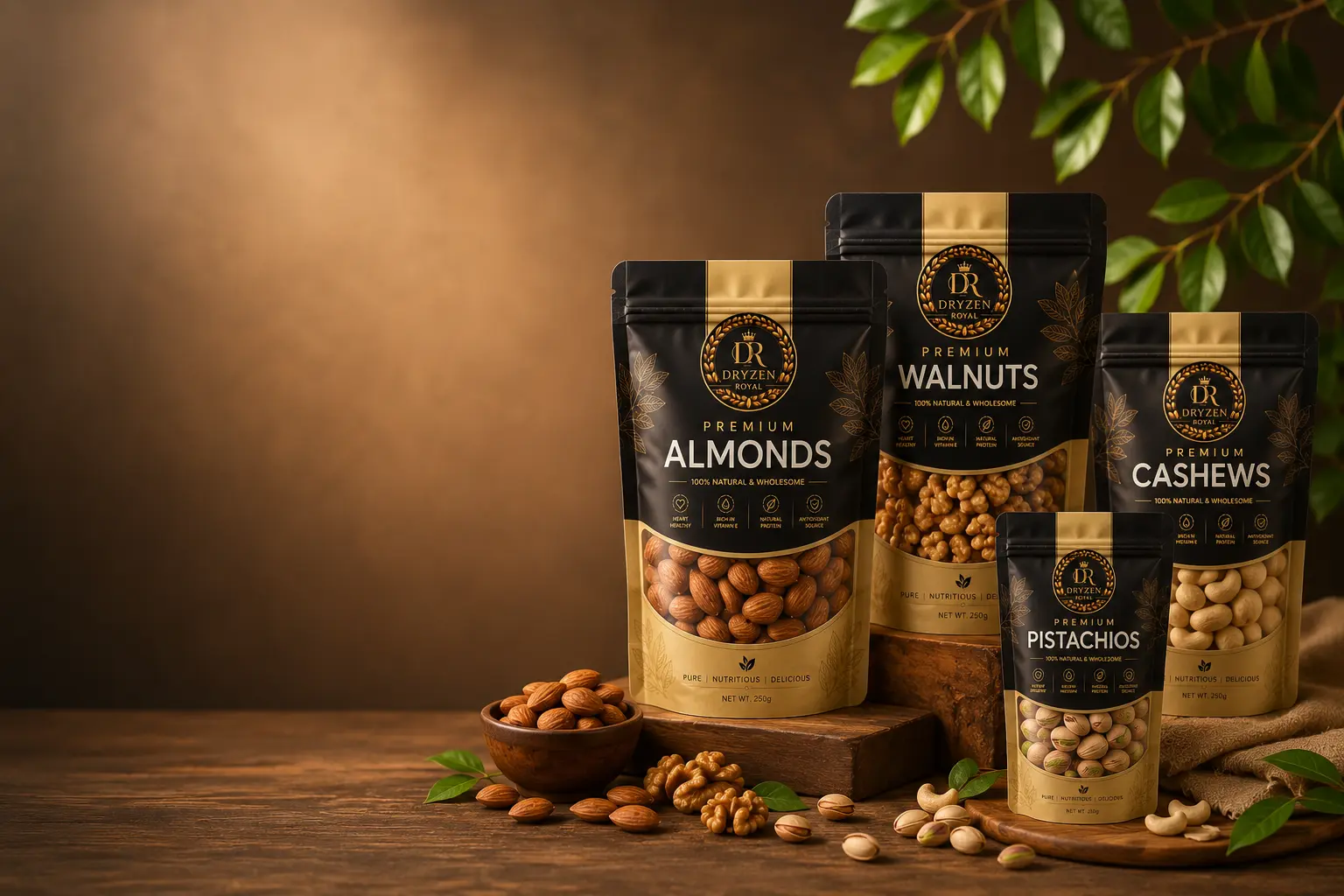
Dry fruits have been treasured for centuries as one of nature's most convenient and nutrient-dense foods. Long before refrigeration existed, ancient civilizations discovered that drying fruits and nuts preserved their nutrition while concentrating their natural flavors. Today, dry fruits remain a staple in kitchens around the world, valued not just for their taste, but for the impressive list of health benefits they offer. At Dryzen Royal, we bring you a handpicked selection of premium dry fruits: almonds, cashews, walnuts, pistachios, and raisins, sourced for freshness, purity, and quality you can trust.
In this comprehensive guide, we'll explore everything you need to know about dry fruits: what they are, their incredible health benefits, detailed nutrition breakdowns, how to store them, who should eat them, and answers to the most common questions buyers ask before purchasing dry fruits online.
Dry fruits are fruits and nuts from which most of their natural water content has been removed, either through sun-drying, air-drying, or controlled dehydration. This process concentrates their natural sugars, vitamins, minerals, and antioxidants, resulting in a compact, nutrient-dense food that stays fresh for months when stored correctly. The term "dry fruits" is often used broadly to include both true dried fruits (like raisins, apricots, and figs) and tree nuts (like almonds, cashews, walnuts, and pistachios) — all of which are staples of a healthy diet.
Unlike processed snacks loaded with refined sugar and unhealthy fats, dry fruits offer natural sweetness and healthy fats in their most wholesome form. This is exactly why nutritionists and doctors around the world recommend including a daily handful of dry fruits in your diet.
Dry fruits have played an important cultural and culinary role across South Asia, the Middle East, and the Mediterranean for thousands of years. In Pakistan and India, dry fruits like almonds (badam), cashews (kaju), walnuts (akhrot), and pistachios (pista) are deeply woven into tradition — served during weddings, festivals like Eid, and as gifts symbolizing prosperity and good health. Winters especially call for dry fruits, as they're believed to generate natural body warmth and provide sustained energy during the colder months.
Beyond tradition, dry fruits have also earned their place in modern nutrition science, with numerous studies highlighting their role in heart health, weight management, and overall wellness.
Almonds are among the most popular and nutritionally dense dry fruits available. They're rich in Vitamin E, magnesium, and healthy monounsaturated fats. Regular almond consumption is linked to improved heart health, better skin, and enhanced brain function. Almonds are versatile enough to be eaten raw, soaked overnight, or roasted, and they pair beautifully with both sweet and savory dishes.
Cashews offer a creamy, buttery texture and a naturally sweet flavor. They're an excellent source of copper, zinc, and magnesium, all of which support immune function and bone health. Cashews are lower in fiber than almonds but higher in certain minerals, making them a great complementary addition to any dry fruit mix.
Walnuts stand out among dry fruits for their high omega-3 fatty acid content, making them one of the best plant-based sources of this essential nutrient. Their distinctive brain-like shape has long been associated with cognitive health, and research increasingly supports walnuts' role in supporting memory and brain function.
Pistachios are unique among dry fruits for their vibrant green color and lower calorie density compared to other nuts. They're rich in fiber, protein, and antioxidants like lutein and zeaxanthin, which support eye health. Their satisfying crunch also makes them one of the most popular snacking dry fruits.
Raisins are dried grapes packed with natural sugars, iron, and antioxidants. Unlike nuts, raisins are lower in fat but higher in natural energy, making them a favorite among athletes and children alike. They're commonly used in desserts, breakfast bowls, and traditional dishes across South Asia.
Beyond the core nuts, dried fruits like dates, apricots, and figs round out a complete dry fruits collection. Dates are a natural energy booster rich in fiber and potassium, dried apricots are packed with Vitamin A and antioxidants, and figs are known for supporting digestive health thanks to their high fiber content.
Adding a daily handful of dry fruits to your diet can support your health in numerous ways. Here are 15 evidence-backed benefits:
Nutrient | Almonds | Cashews | Walnuts | Pistachios | Raisins |
|---|---|---|---|---|---|
Calories | 579 kcal | 553 kcal | 654 kcal | 560 kcal | 299 kcal |
Protein | 21g | 18g | 15g | 20g | 3.1g |
Healthy Fats | 50g | 44g | 65g | 45g | 0.5g |
Carbohydrates | 22g | 30g | 14g | 28g | 79g |
Fiber | 12.5g | 3.3g | 6.7g | 10g | 3.7g |
Iron | 3.7mg | 6.7mg | 2.9mg | 3.9mg | 1.9mg |
Calcium | 269mg | 37mg | 98mg | 105mg | 50mg |
Vitamin E | 25.6mg | 0.9mg | 0.7mg | 2.9mg | 0.1mg |
Note: Nutritional values are approximate and can vary based on origin, growing conditions, and processing method.
Dry fruits are suitable for nearly everyone, though different groups benefit in different ways:
A quick handful of dry fruits provides sustained mental energy and focus, making them ideal for long study sessions or busy workdays — a far healthier alternative to sugary snacks or caffeine-heavy drinks.
Dry fruits offer a natural source of protein and healthy fats that support muscle recovery and provide quick energy before or after a workout.
Dry fruits make an excellent alternative to processed snacks for children, offering essential vitamins and minerals that support growth and development. As always, nuts should be given in age-appropriate, chopped forms for younger children to avoid choking hazards.
Those following keto-friendly, vegetarian, or whole-food diets often turn to dry fruits as a nutrient-dense way to add healthy fats and protein without processed ingredients.
While often used interchangeably, there are subtle differences. True dry fruits (raisins, dried apricots, dates) are dehydrated fruits, higher in natural sugars and fiber. Tree nuts (almonds, cashews, walnuts, pistachios) are technically seeds or drupes, higher in healthy fats and protein. Seeds like chia, flax, and pumpkin seeds are smaller and typically used in different culinary contexts. In everyday language across South Asia, "dry fruits" commonly refers to both categories together — nuts and dried fruits — which is how we use the term throughout this guide.
Not all dry fruits are created equal. Here's what to look for when buying dry fruits online or in-store:
While dry fruits are calorie-dense, moderate daily consumption as part of a balanced diet actually supports healthy weight management thanks to their fiber and protein content, which promotes satiety.
Each type of dry fruit has a distinct nutritional profile — walnuts are richer in omega-3s, while almonds are higher in Vitamin E and calcium, for example. Variety is key to getting a broad range of nutrients.
While traditionally associated with winter warmth, dry fruits are nutritious and beneficial year-round, offering sustained energy and essential nutrients in every season.
Store your dry fruits in an airtight container in a cool, dry place away from direct sunlight. Exposure to heat, moisture, and air can cause nuts to turn rancid faster due to their natural oil content. For extended freshness, refrigeration can help preserve their natural oils, crunch, and flavor for up to six months. Always reseal packaging tightly after each use to keep out moisture and odors from other foods.
Across Pakistan and South Asia, dry fruits have long been considered a thoughtful, premium gift for weddings, festivals like Eid, corporate occasions, and family gatherings. Unlike many gifts, dry fruits combine indulgence with genuine health value, making them appreciated by recipients of all ages. Dryzen Royal offers beautifully packaged gift boxes and combo packs designed specifically for gifting occasions.
Dry fruits are far more than just a tasty snack — they're a nutritional powerhouse backed by centuries of tradition and modern science alike. Whether you're looking to boost your energy, support heart health, or find the perfect gift for a loved one, premium dry fruits offer something for everyone. Ready to experience the difference quality makes? Explore our full range of dry fruits, including Premium Almonds (Badam), Premium Cashew Nuts (Kaju), Walnut Kernels (Akhrot), and Pistachios (Pista) — freshly packed and delivered to your door by Dryzen Royal.
Yes, all our dry fruits are sourced in small batches and packed to ensure maximum freshness before reaching you.
Our dry fruits are sold in their natural, unroasted form so you can enjoy them as-is or roast them at home to your preference.
No, our dry fruits are 100% natural with no artificial preservatives or added colors.
Yes, a small daily handful of dry fruits fits well into a balanced diet and offers protein, fiber, and healthy fats.
Most nuts like almonds, walnuts, and cashews are keto-friendly in moderation due to their low net carbs, while raisins are higher in natural sugar.
Fasih Frankly
SEO Expert and eCommerce Specialist. Shopify, eBay and online selling.
Questions about this article?
Email us and we will get back to you.
Explore more
Yes, dry fruits are a healthy snack for children, though nuts should be given in age-appropriate forms to avoid choking hazards for younger kids.
Store them in an airtight container in a cool, dry place, or refrigerate for extended freshness.
When stored properly in an airtight container, most dry fruits stay fresh for 4 to 6 months.
Yes, all our dry fruits are naturally gluten-free.
Yes, we offer premium gift packs and combo packs perfect for festivals, weddings, and corporate gifting.
Walnuts and almonds are particularly beneficial for heart health due to their omega-3 fatty acids and monounsaturated fat content.
Nuts like almonds, walnuts, cashews, and pistachios can generally be included in moderation, but dried fruits high in natural sugar should be consumed carefully.
In moderate portions, dry fruits can support weight management due to their fiber and protein content, which promotes fullness.
Many people prefer eating dry fruits in the morning on an empty stomach or soaked overnight, though they can be enjoyed anytime.
Yes, the healthy fats, Vitamin E, and antioxidants in dry fruits like almonds support skin hydration and a healthy glow.
Dry fruits are generally considered safe and beneficial during pregnancy due to their nutrient density, but portions should be discussed with a healthcare provider.
Dry fruits is often used as an umbrella term covering both dehydrated fruits and tree nuts, especially in South Asian usage.
A general guideline is a small handful, about 20 to 30 grams, per day, though individual needs vary.
Yes, all our dry fruits are 100% plant-based and suitable for vegetarian and vegan diets.
Yes, Dryzen Royal offers nationwide delivery with careful packaging to ensure your dry fruits arrive fresh and intact.
